Victron Lynx Power In - Modular DC busbar
Compact, modular and reliable DC distribution point to optimise the integration of batteries in your photovoltaic installation.
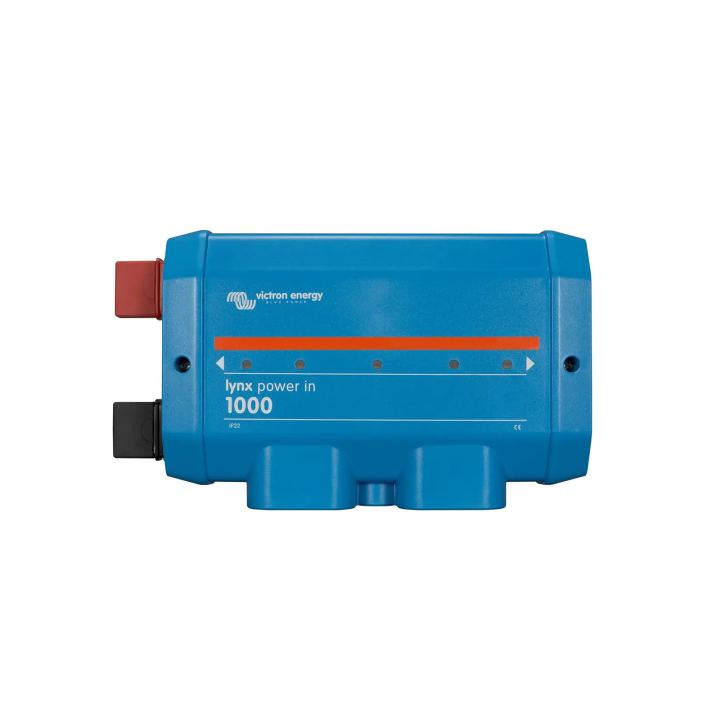
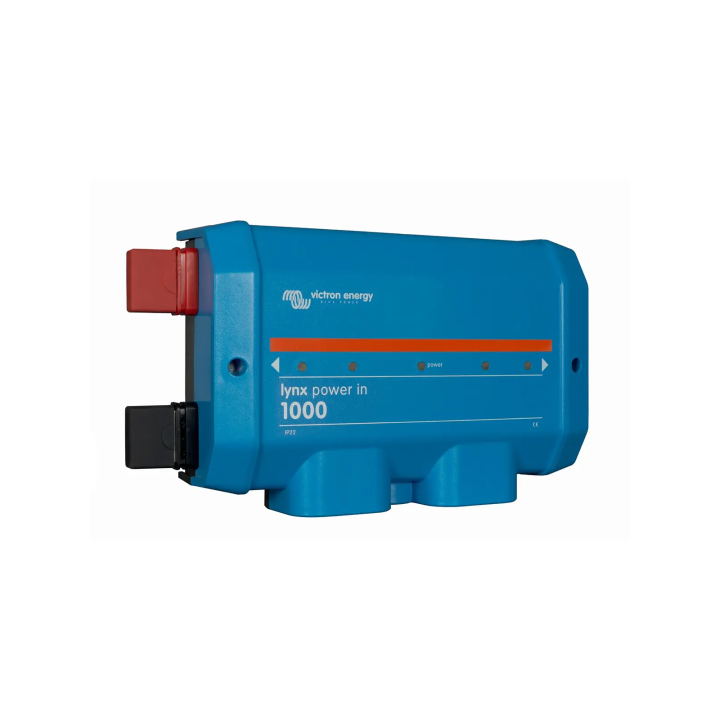
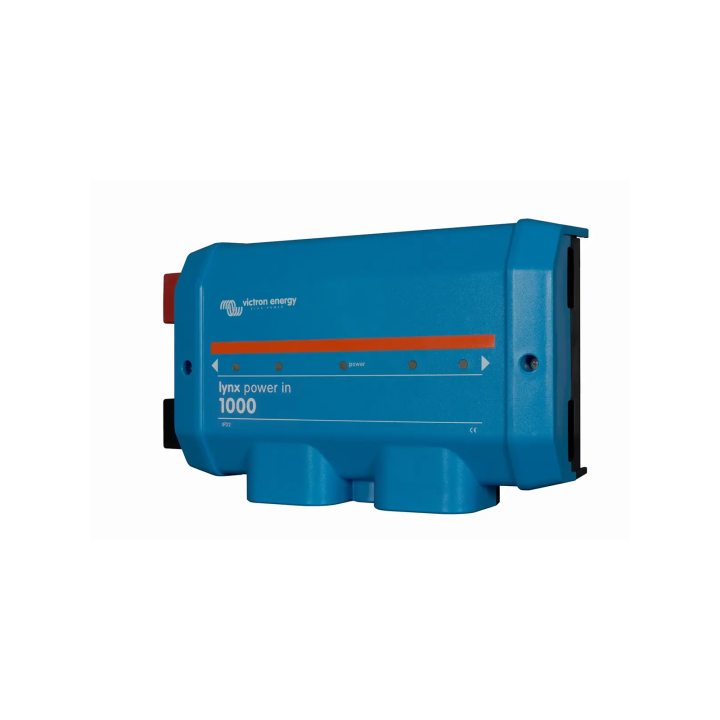
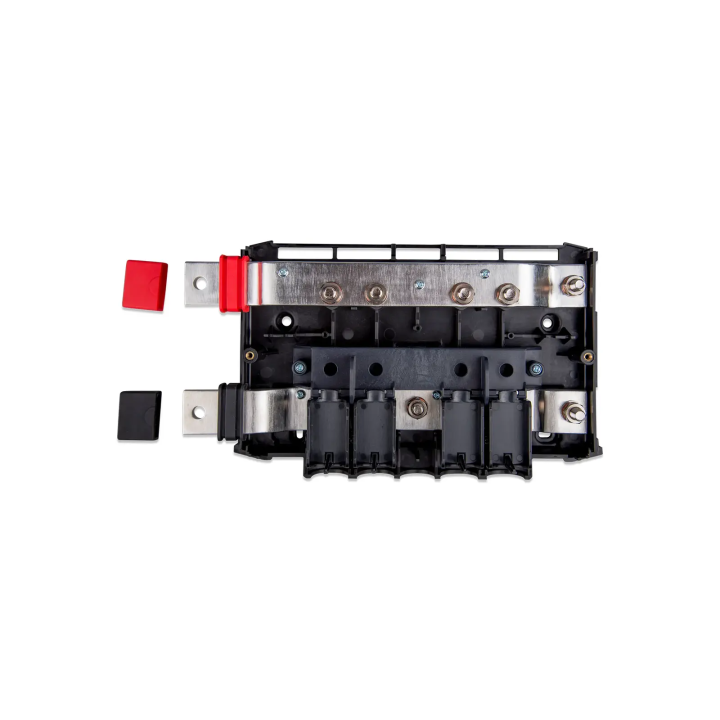
The Victron Lynx Power In is a modular DC busbar designed to centralise power distribution from your batteries to inverters, chargers or DC circuits in photovoltaic, marine or leisure vehicle installations. Available in an M8 version for domestic use and an M10 version for installations with high currents or thick cables. Reliable, secure and perfectly integrated into the Victron Lynx ecosystem.
Modularity and integration
Designed as part of the Lynx network, the Lynx Power In can be used to assemble a scalable DC distribution point. Its modular approach means that components (shunts, BMS, fuses) can be added at a later date without affecting the existing architecture - an advantage for scalable self-consumption projects in France, Belgium and the European Union.
Compatibility, safety and reliability
The Lynx Power In is designed to work with other Victron Lynx modules and complies with the safety requirements for low-voltage DC installations: robust connections, short-circuit and overload protection and a design adapted to marine and mobile environments. Its manufacture by Victron guarantees mechanical and electrical resistance for demanding applications.
Recommended applications
- Residential self-consumption: centralisation of battery outputs to hybrid inverters and DC circuits.
- Boats and leisure vehicles (RV): DC distribution for lighting, pumps and on-board loads.
- Micro-grids and industrial installations: central point for managing multiple sources and battery banks.
- Modular projects: scalable installations requiring extension and simplified maintenance.
Choosing the right version (M8 vs M10)
Lynx Power In comes in two versions: M8 for moderate currents and standard cable cross-sections in residential applications; M10 for higher currents and larger cross-section cables, recommended for demanding power supplies or industrial installations. Select the version according to the maximum DC current expected and the cable cross-section used to avoid excessive voltage drops.
Detailed technical specifications
- Versions available: M8 (for moderate cross-sections/currents) and M10 (for high cross-sections/currents)
- Compatibility: Designed to integrate with the Lynx system (Lynx Shunt VE.Can, Lynx Smart BMS)
- Functions: centralisation of DC distribution, robust connections, modularity for expansion
- Safety: short-circuit and overload protection (depending on installation diagram and protection installed)
- Applications: self-consumption homes, boats, recreational vehicles (RV), microgrids, industrial installations
- Documentation: multilingual manuals available (FR/EN/DE/NL/ES) - see downloads provided by the manufacturer
Wattuneed installation advice and recommendations
To guarantee optimum performance: size the cable cross-section according to the maximum current and cable length to limit the voltage drop; prefer the M10 version if you are planning sustained currents or using heavy cables; always combine the Lynx Power In with an appropriate protection scheme (fuses or DC circuit breakers) and a Lynx Shunt to measure the stored and restored energy accurately.
Why choose Lynx Power In from Wattuneed?
As a specialist in self-consumption, Wattuneed recommends the Lynx Power In for its native compatibility with the Victron ecosystem, its robustness and its ability to cleanly structure the DC distribution of a storage system. It represents a reliable technical solution for optimising the interconnection of batteries and facilitating the maintenance and upgrading of the installation.
Further information
For assistance with choice (M8 vs M10), customised wiring diagram or integration with Victron inverter/charger, our Wattuneed technical team provides advice and sizing for France and Belgium. Consult the documentation provided or contact our technical support team for specific project advice.
Comparison of Lynx solutions: Power In, Distributor and Class-T
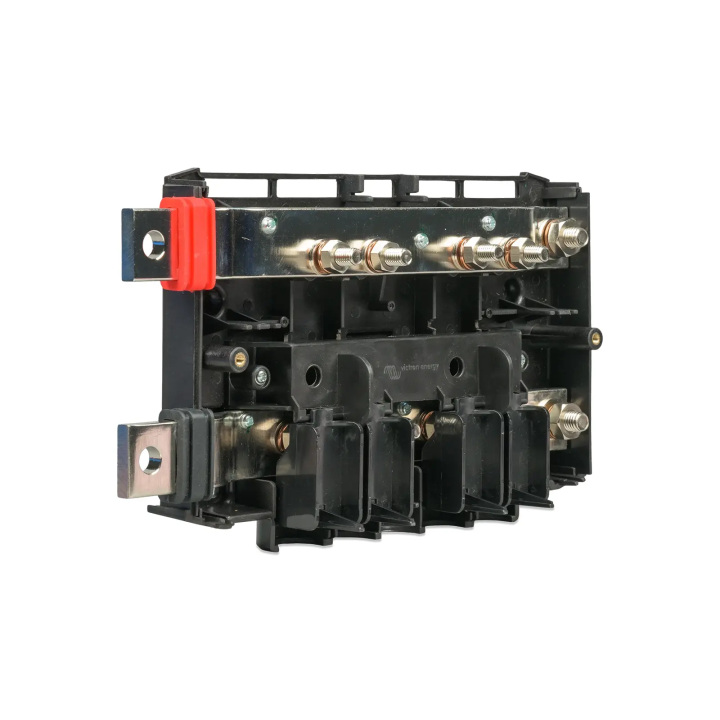
- Lynx Power In: this is the entry-level version. It's simply a busbar (positive and negative) for connecting up to four batteries or inverters. As it has no built-in fuses, protection must be installed upstream. This is the simplest and most economical option.
- Lynx Distributor: an evolution of the Power In. It can also connect up to four devices, but with integrated protection. Each connection has a slot for a MEGA fuse. Its main advantage is monitoring: it detects the state of each fuse and indicates whether it is blown, either via an LED or by transmitting the information to a Cerbo GX.
- Lynx Class-T Power In: a specific version of the Power In, adapted to systems fitted with modern lithium batteries capable of delivering very high short-circuit currents. It uses Class-T fuses, which are faster and have a much higher interrupting capacity than MEGA fuses. This makes it a safer solution for high-power installations based on lithium batteries.
Frequently asked questions (FAQ)
1. What is the difference between the M8 and M10 versions?
The difference lies in the size of the terminals and the current capacity. The M8 version is suitable for moderate cable cross-sections and currents, while the M10 is suitable for installations requiring higher currents or thicker cables.
2. Can I use Lynx Power In in a residential solar installation?
Yes, the Lynx Power In is designed to centralise DC distribution in photovoltaic systems with batteries, both in residential and in isolated or industrial sites.
3. Does Lynx Power In incorporate fuse protection?
No, Lynx Power In is a distribution busbar. To protect your circuits, we recommend adding a Lynx Distributor or suitable external DC fuses.
4. Is it compatible with Victron lithium batteries and other brands?
Yes, as long as the permissible voltage and current correspond to the specifications. The Lynx Power In is optimised for Victron batteries (Lithium Smart, SuperPack, etc.), but can also work with other brands.
5. Can I use it in a boat or motor home?
Absolutely. The Lynx Power In is widely used in marine and on-board applications thanks to its modularity and robustness.
6. How do I know which cable cross-section to use?
The cross-section depends on the length of the cable and the maximum current of your installation. A voltage drop of less than 3% is recommended. Don't hesitate to contact our Wattuneed team for precise sizing.





Comments (0)
Your review appreciation cannot be sent
Report comment
Report sent
Your report cannot be sent